
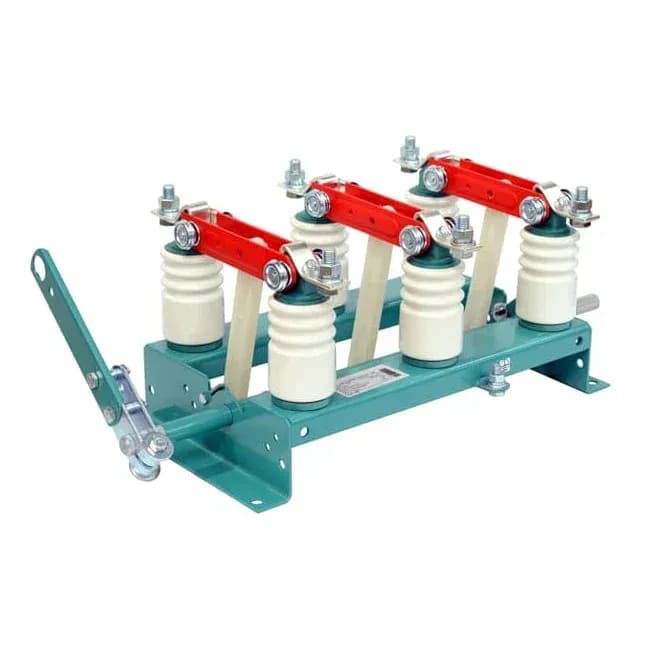
ABB Disconnectors (DS)
Provide an isolation point for a circuit under off-load conditions.
Explore the rangeOverview
Indoor disconnectors provide a visible isolation gap for circuits opened and closed without load current. Choose the pole arrangement, drive and interlocks to suit the switchgear and the sequence of operations.
OW indoor disconnectors
OW uses visible knife contacts to isolate indoor circuits after current has been interrupted. Single- and three-pole versions support manual or motor drives, with horizontal or vertical mounting to suit the switchgear layout.
For off-load isolation in indoor distribution panels, where the open contact position must be visible and interlocked with the switching sequence.
ABB U.S. OW indoor disconnector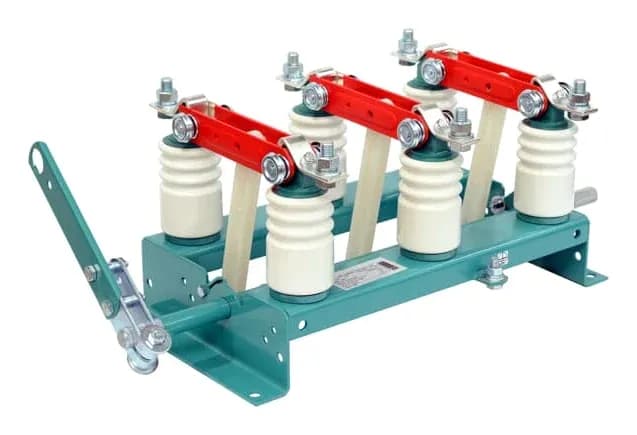
OWD indoor disconnectors
OWD extends indoor isolation to higher-current circuits, with single-, two- and three-pole designs. Visible contacts and manual or motor operation support different panel arrangements; the device is operated with no load current flowing.
For indoor switchgear requiring off-load isolation and flexible pole configurations, including installations with higher continuous-current requirements.
ABB U.S. OWD indoor disconnector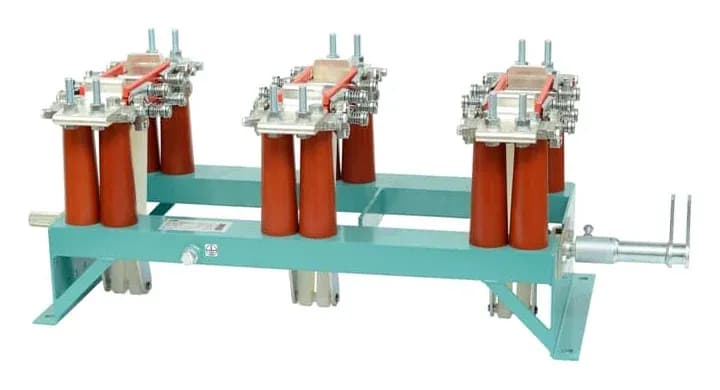
OJON indoor disconnectors
OJON combines double-knife contacts, direct current paths and cast-resin insulators for high short-circuit strength. Spring pressure maintains contact force, while silver-plated contact surfaces limit ageing and temperature rise. The design connects to copper or aluminium busbars.
For indoor busbar isolation where high continuous current and short-circuit withstand are important. Use separate switching equipment to interrupt load current before isolation.
ABB U.S. OJON indoor disconnector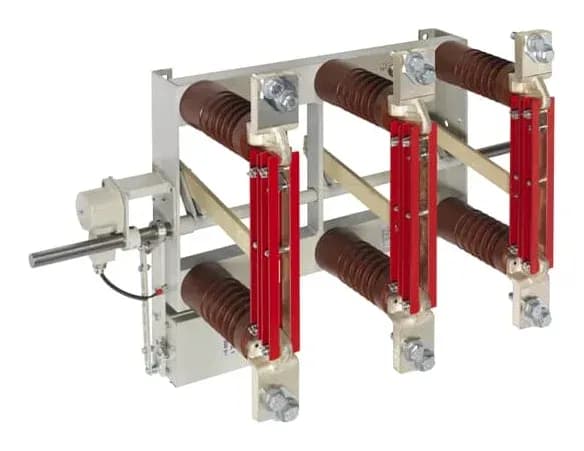
Distribution solutions by industry
Industrial distribution brings protection, switching and isolation together. Relays detect faults and circuit breakers interrupt current; disconnectors then provide visible off-load isolation for the selected circuit. In compartmentalized switchgear, the isolation points, earthing arrangements and interlocks must follow the approved system design.
For planning maintainable distribution across process plants, semiconductor facilities, data centers and renewable-energy sites. The ABB illustration shows an oil, gas and chemical industry setting, rather than a specific OW or OJON installation.

What to bring to a selection review
Provide a single-line diagram, device location, rated voltage and current, short-time withstand duty and available space. Include the drive, earthing and interlocking requirements. Any load-current interruption requires separate equipment rated for that duty.
Prepare the enquiry
Provide the single-line diagram, device location, electrical requirements, installation space, operating method and interlocking needs. OW/OWD are reference candidates. If a different family is offered, verify the copy and specification against that family's documentation.
Discuss the installation with Forte
For a Taiwan project, include the installation location, required delivery window and any existing panel information. Forte can review the enquiry and confirm the applicable models and scope for the project.
Discuss your project with Forte
Send your single-line diagram, model reference or project requirements.
Discuss your disconnector requirements